SHE’S 81. I’M 61. The Oldest Woman in Our Family Has the Best Hands. At Thanksgiving, I Finally Asked Why.





The answer had been on her wrist for thirty years — and I’d been teasing her about it the whole time.


The jar of Bertolli sauce won.
5:40 on a Tuesday evening. Both hands on the lid, elbows out. Nothing.
So I reached for the yellow rubber jar opener — the one I bought two years ago and never mentioned to anybody. It slipped twice. A gadget that exists for exactly this problem, and I still couldn’t do it.
I put the jar back in the pantry and made toast for dinner. When Frank asked, I said I’d had a big lunch. That wasn’t true. I just didn’t want my husband watching me lose to a jar of pasta sauce.
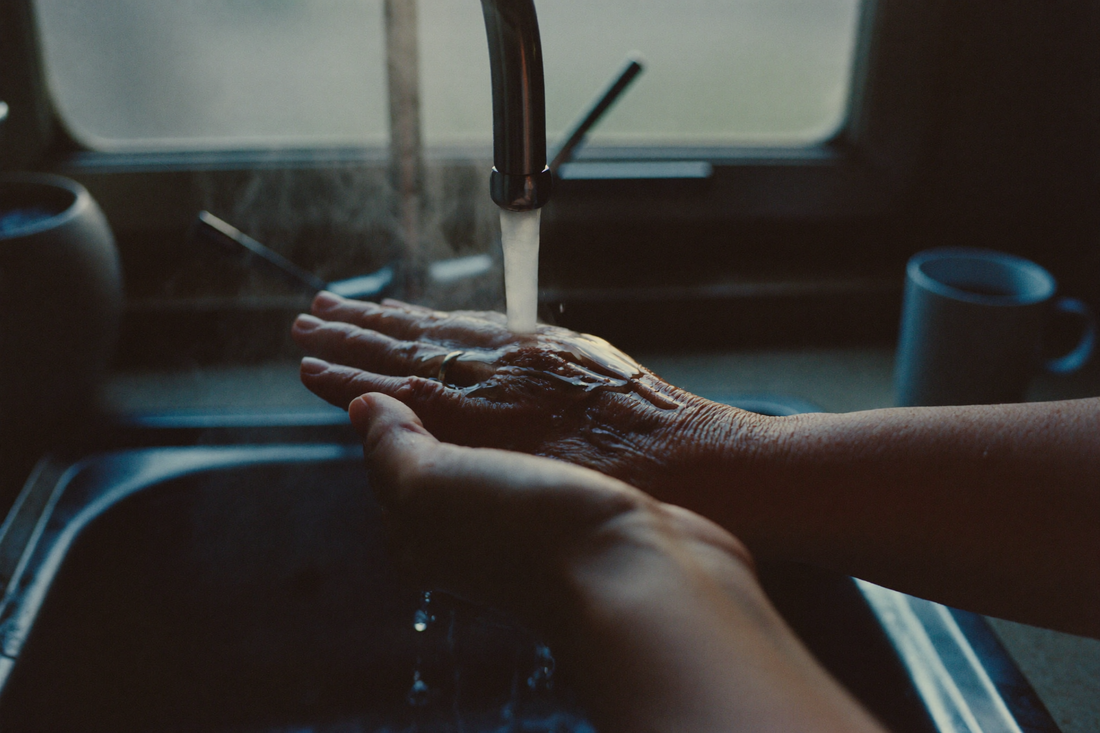
And here’s the part I’ve never told anyone, not even my daughter. The next morning I got up before Frank’s alarm and ran my hands under hot water at the kitchen sink until they loosened up — so when I handed him his coffee, nothing would look wrong. I’d been doing that every single morning for two years.
I taught third grade for forty years. And a jar of sauce beat me.
What finally changed wasn’t my doctor, my collagen powder, or anything else I’d spent eleven years being responsible about. It was my sister-in-law Marie. She’s eighty-one. And we’d been teasing her at Thanksgiving for as long as I can remember.
The Thanksgiving Joke That Stopped Being Funny
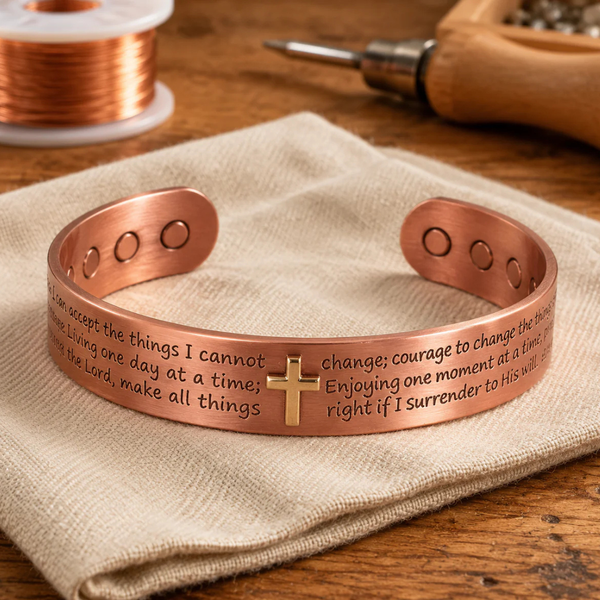
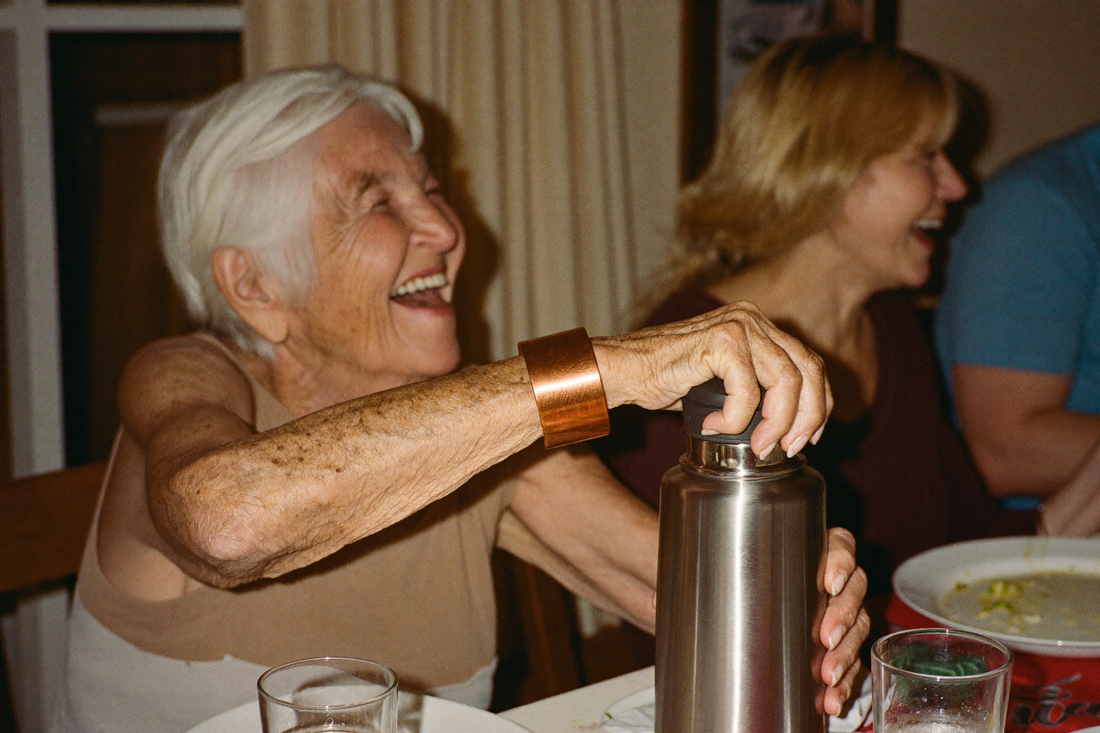
For as long as I’ve known her, Marie has worn a copper bracelet gone green at the clasp. For years I teased her about it, to her face, at every holiday. “Marie, that thing belongs in a museum.”
She’d just laugh, twist the lid off her thermos, and say, “Museums are full of stuff that worked, honey.”
Here’s what I never let myself notice. Marie is twenty years older than me. Marie opens her own jars. Marie carries her own casserole dish up my front steps. Marie doesn’t do the little pause at the bottom of the staircase — the hand-flat-on-the-railing, breath-in-through-the-nose pause — that I’d started doing at sixty-one.
Meanwhile, I was the responsible one. The turmeric. The fish oil. The collagen powder in my coffee every single morning for six years. Every appointment kept. And when I finally asked my doctor why everything was still getting harder, he didn’t even look up from the screen:
“It’s just wear and tear at your age.”
That night — 2:14 a.m., I know because I checked, the way you check on the fourth night in a row — I finally asked myself the question I’d been dodging for eleven years:
If everything I was told to do only ever managed this... why does the woman with the museum bracelet have the best hands in the family?
So at Thanksgiving I finally asked her. Straight out, no teasing. She just tapped the green clasp and said, “Thirty years, honey. Go look it up.”
The next morning I went looking for the study that proves copper bracelets are nonsense.
I found a scale instead.
What Nobody Printed on the Label
I’m not a doctor. I’m a retired schoolteacher who knows how to read, and I spent three weeks reading published research the way I used to grade papers — with a red pen and a suspicious attitude. You can check every word of this.
Everything holding you upright — joints, skin, blood vessels — is built from collagen. But collagen is only bricks. Your body has to mortar those bricks together, and the enzyme that lays the mortar, lysyl oxidase, cannot function without one mineral at its core: copper. That’s published biochemistry — look it up on PubMed tonight.
And while I was in there, I counted: more than thirty different enzymes in the human body need copper to run at all. Thirty. In sixty-one years, nobody in a white coat had ever said the word copper to me once.
No copper, no mortar. Six years I drank that $43 powder. I was buying bricks and hoping they’d stack themselves.
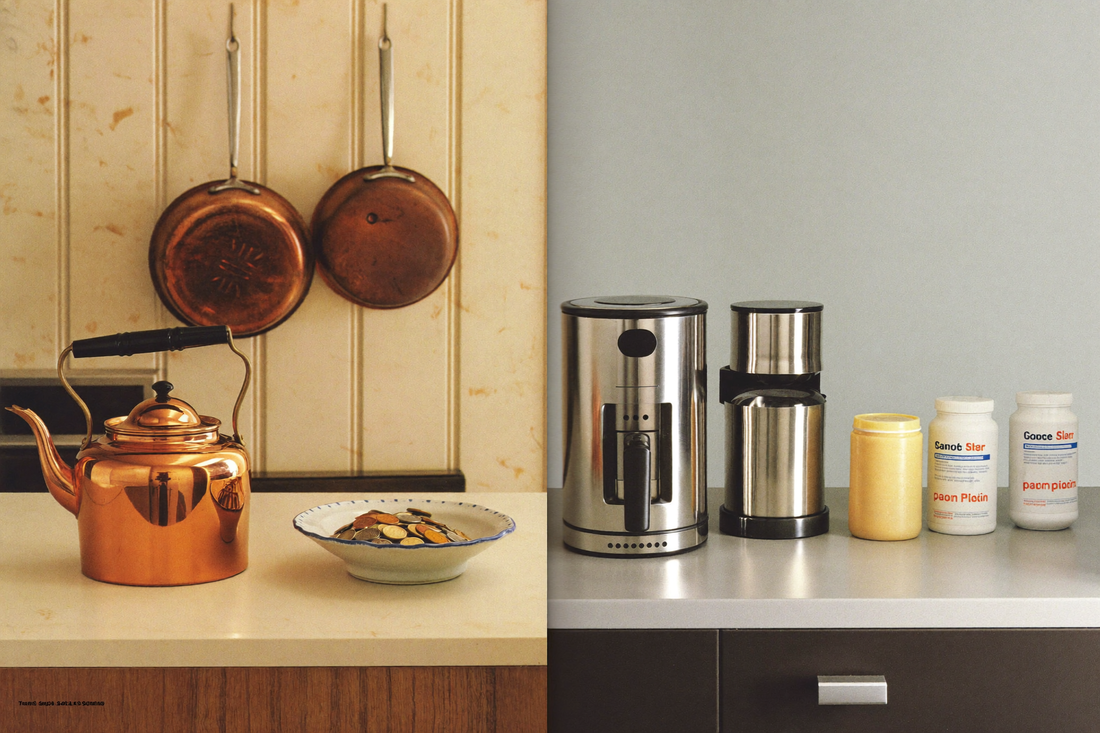
It gets worse. On the same shelf sat the big white zinc bottle — the immunity one half of America bought in 2020. High-dose zinc blocks copper absorption in your gut. I didn’t believe that, so I asked the pharmacist at my Kroger. She confirmed it in about ten seconds. It is not printed on either bottle.
Six years of that powder — and the zinc sitting right next to it on my shelf was undoing it the whole time. Nobody thought to mention it.
And the copper was already leaving from every direction. My grandmother touched copper a hundred times a day — the kettle, the pans, the coins in her apron pocket. Then menopause: one paper I read said that when estrogen drops, blood copper drops with it. I sat with that one for a while. Right when I’d have wanted the mortar most.
There’s a Cambridge nutrition journal that calls it an “epidemic of chronic copper deficiency.”
An epidemic. And my doctor called it “wear and tear at your age.”
So let me say to you what nobody said to me, one woman to another: if you’ve been quietly bracing on your own staircase and blaming yourself for getting old — it may not be your age. And it was never your fault, because nobody printed the warning on either bottle.
The Study With the Scale
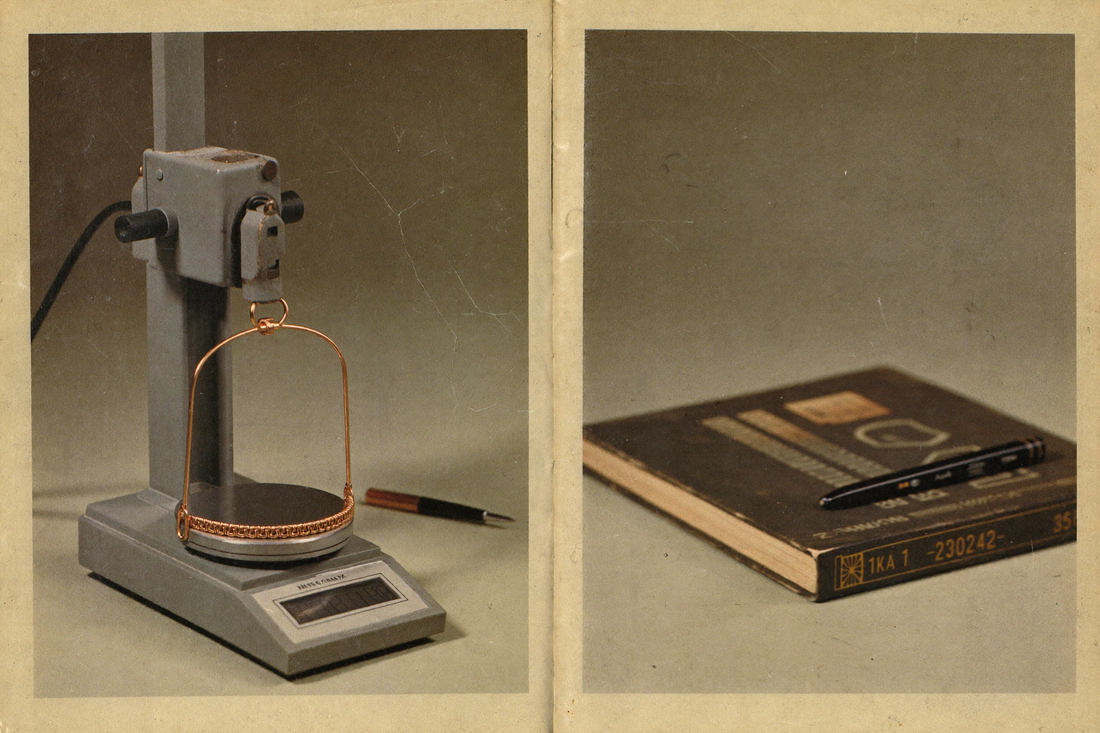
In 1976, researchers in a journal called Agents and Actions did something almost comically simple. Roughly 300 people. Real copper bracelets against painted aluminum fakes. And they weighed the copper ones on a precision scale, before and after months of wear.
The bracelets came back lighter — about 13 milligrams a month, dissolved into the wearers’ sweat. Copper is soluble in human sweat. The metal doesn’t just sit on your wrist. It leaves.
Onto — and into — the person wearing it.
When I read that, Marie’s green clasp stopped being a punchline. That green mark is where the copper went.
Why My Doctor Never Mentioned It
Here’s where three weeks of reading turned into something else.
Copper as medicine is not some internet fad. It’s the oldest medical habit human beings have. The oldest medical document ever found — an Egyptian papyrus, more than four thousand years old — describes doctors using copper. Egyptian queens wore it. Roman army surgeons carried it. And so did every generation of women who came before us — quietly, on a wrist, without anyone making a fuss about it. In India, families have stored their drinking water in copper vessels for thousands of years — they still do — and my own great-grandmother in Ohio did the same thing without knowing there was a word for it. Copper kettle. Copper pans. Copper coins in every pocket in the country. For five thousand years, people lived skin to skin with this metal every single day of their lives.
Then, in one generation — mine — it all went away. Stainless steel, plastic, cards instead of coins.
And here’s the part I had to read three times to believe. Doctors in the 1800s were still prescribing copper, and publishing their results in medical journals. You can find the journals. Then it just disappears from the textbooks. Not disproven. Not withdrawn. Gone.
I kept asking why, and the answer turned out to be dull and infuriating at the same time: nobody can patent a metal. A drug company will spend millions running trials on a pill, because the patent pays them back. Nobody spends millions studying something anyone on earth can sell for the price of the metal itself. No patent, no funding. No funding, no trials. No trials, no textbook chapter. No textbook chapter — no doctor who ever learned it. And somewhere along the way, five thousand years of daily human use got filed under “folk remedy,” right next to the crystals.
So no — my doctor isn’t hiding anything from me. He was never taught it. And I’ll be honest, that bothers me more.
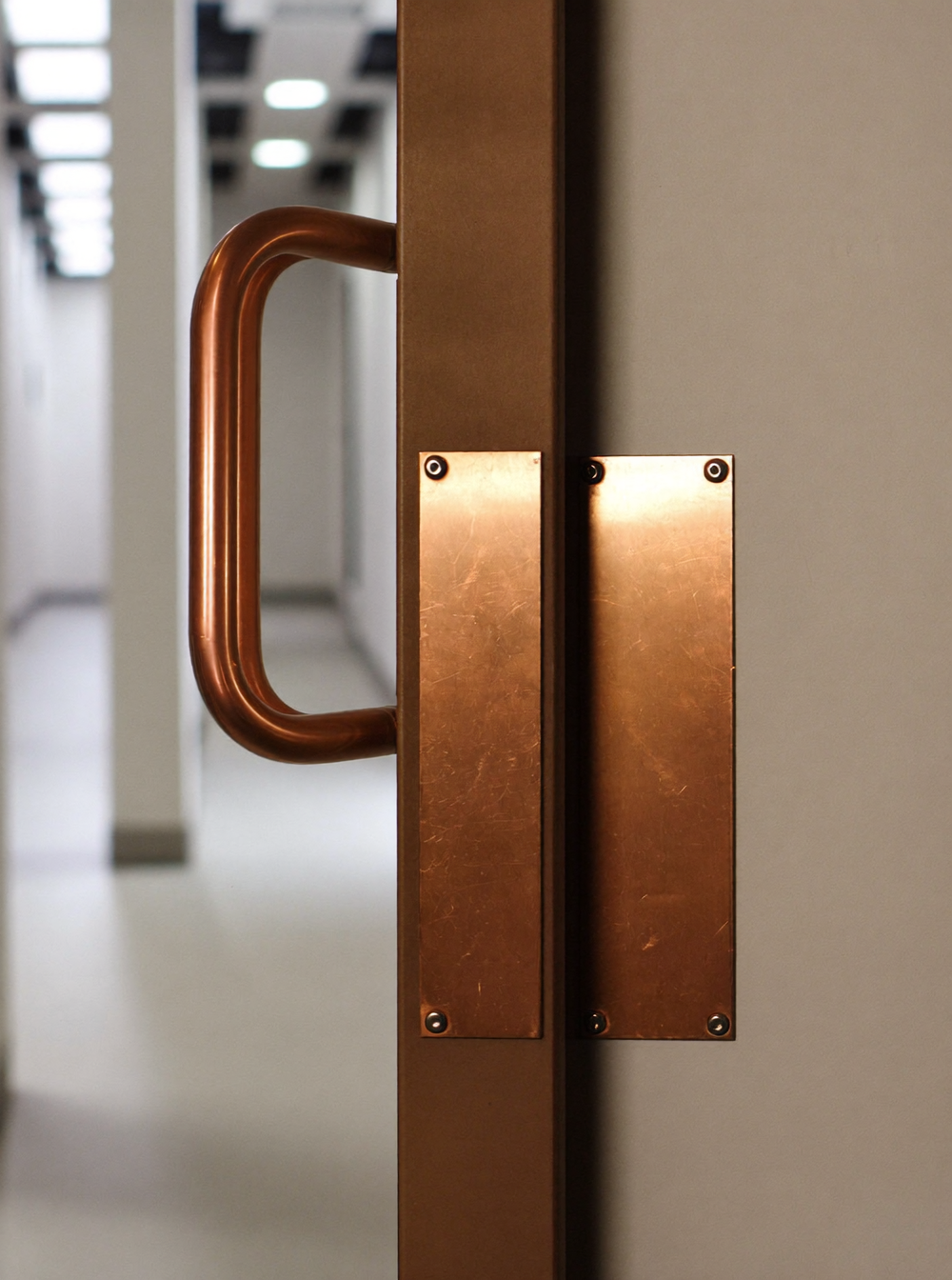
Because in 2008, the EPA registered copper alloys as antimicrobial — the only solid material ever given a public-health registration. Hospitals now bolt copper onto the exact door handles and bed rails they most need to trust.
It’s gone from his textbook. But it’s on his door handle. I read that part twice.
And I thought about eleven years of blaming myself, and the yellow rubber jar opener hidden in my drawer, and I stopped feeling foolish about Marie’s bracelet. Foolish wasn’t the right word for any of this. Robbed was closer.
The Magnet in My Kitchen
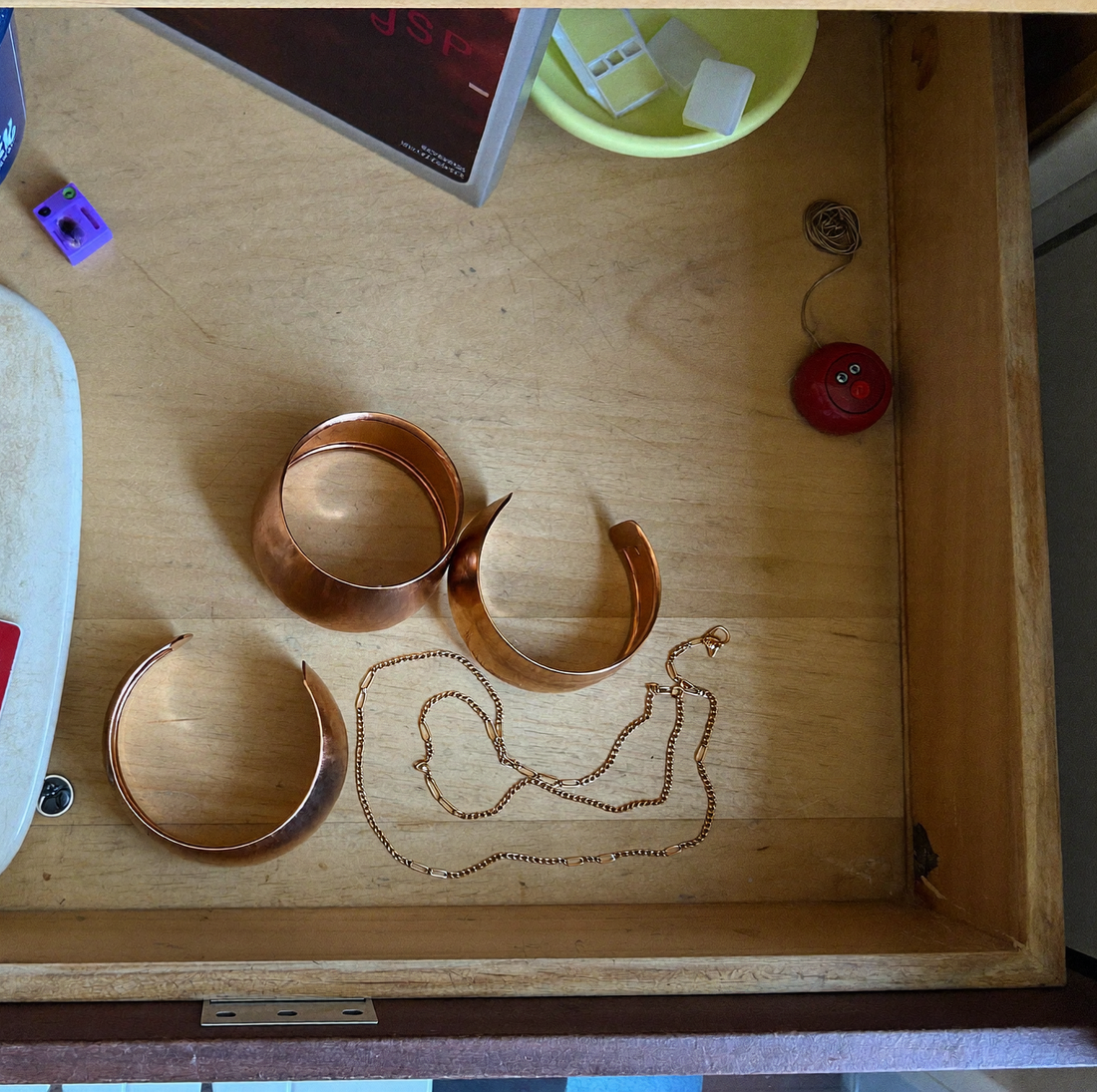
Before I spent a dime, I went through the house and found three “copper” bracelets I’d bought over the years and quietly stopped wearing — Amazon, a mall kiosk, a cruise ship gift shop. The ones that “didn’t work.” Maybe you have a drawer like that too.
I stood in my kitchen holding a fridge magnet, feeling like a fool twice over.
All three stuck.
Copper is not magnetic. If a magnet grabs it, it isn’t copper. I never failed with copper — I never touched it. I’d bought three fakes over the years and blamed copper every time. Plating costs pennies, solid copper doesn’t, and nobody checks. If you’ve ever worn one and felt nothing, go do the ten-second test right now. It will make you angry. It made me angry.
Marie’s bracelet? The magnet slid straight off. Thirty years old and solid all the way through.
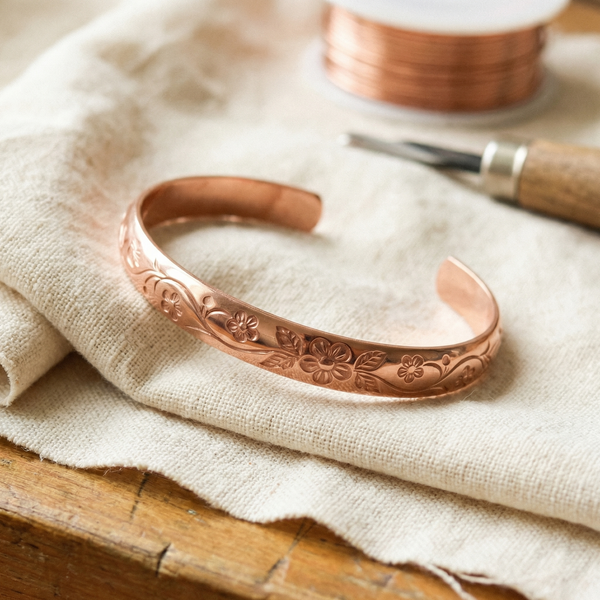
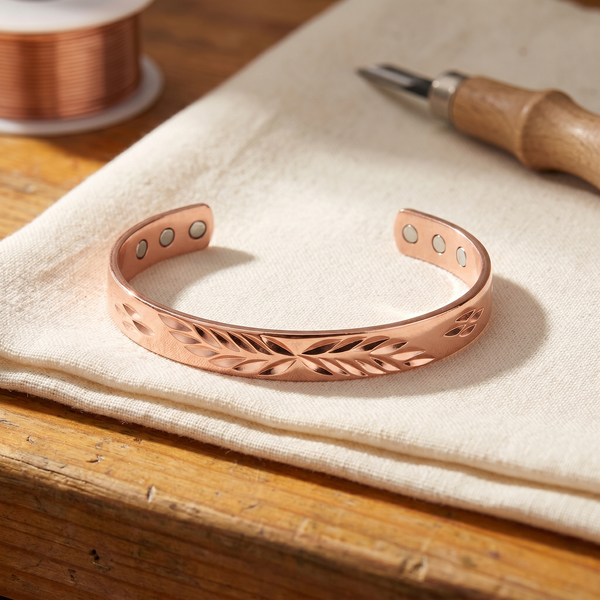
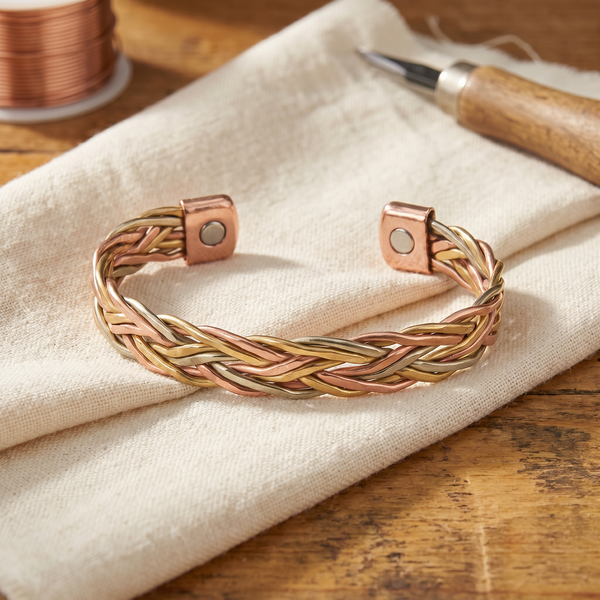
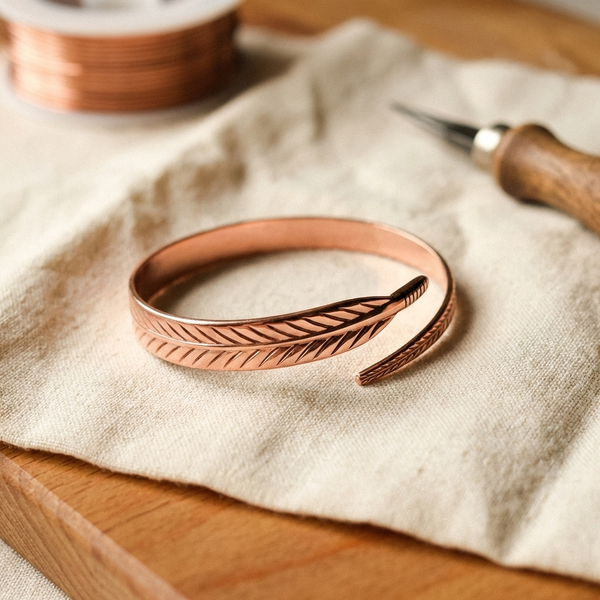
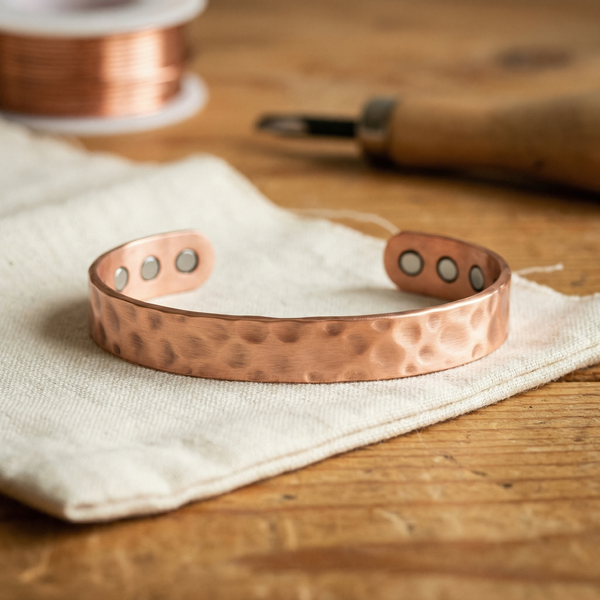
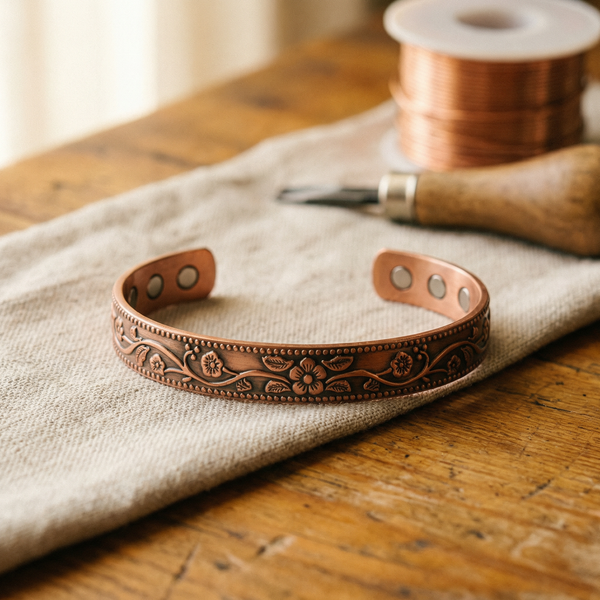
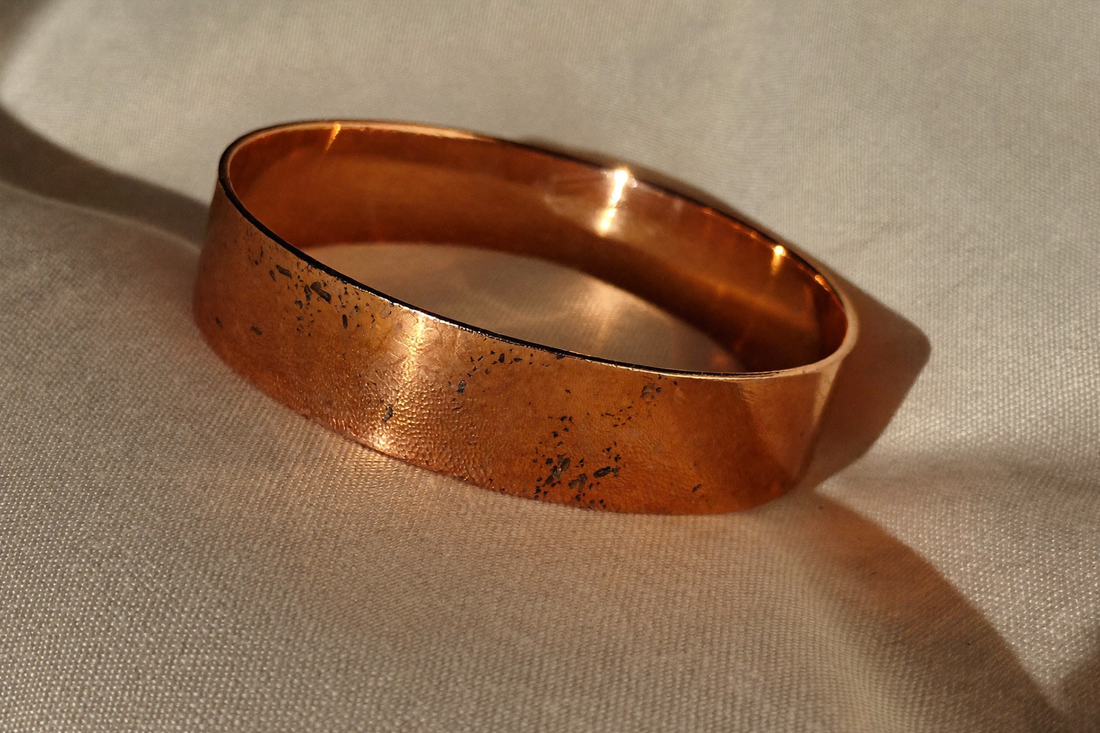
So I went looking for one they still make like that. I ordered two “solid copper” bracelets from two different companies. The first passed the magnet but still felt light and flimsy in my hand, like a soda-can tab. I sent it back. The one I kept came from a small workshop called Maggie's Copper. Solid 99.9% pure copper, hand-made at a New York bench — faint hammer marks near the clasp, and a real weight to it. It’s cold for about a minute, then it takes your temperature and you stop noticing it. That’s what solid metal does. Plating can’t.
The magnet slid straight off. Same as Marie’s.
Marie’s bracelet has been leaving that green mark on her wrist for thirty years. My three drawer bracelets never left one. Not once, in all the years I wore them.
That’s how you know.
Lifetime guarantee · 99.9% pure copper · Hand-made at our New York bench
What the First Month Was Actually Like
The morning it arrived, I put it on at the kitchen sink — and in that day’s square on the wall calendar, where I used to write parent-teacher conferences, I penciled two words: “probably scammed.” Old grading habit. I’d have bet my pension on it. I wore the thing anyway, mostly so I could tell Marie I’d tried.
The first week, nothing happened. I want to be honest about that, because the first week is where I’d have quit if I hadn’t been too stubborn to give Marie the satisfaction. Then sometime in the second week I noticed a faint green ring on my wrist, and my first instinct was to scrub it off in the shower. I got about halfway through before I remembered the scale in that 1976 study. The green isn’t dirt. It’s the receipt. Marie’s clasp has thirty years of it.
Then one morning, right around the middle of the month — the coffee jar. The one the whole hot-water ritual existed for. Except that morning I forgot the ritual. Cold hands, straight out of bed, and I had the lid off before I realized what I was doing. I stood there holding an open jar of coffee, alone in my kitchen at 7:15 in the morning, and laughed out loud.
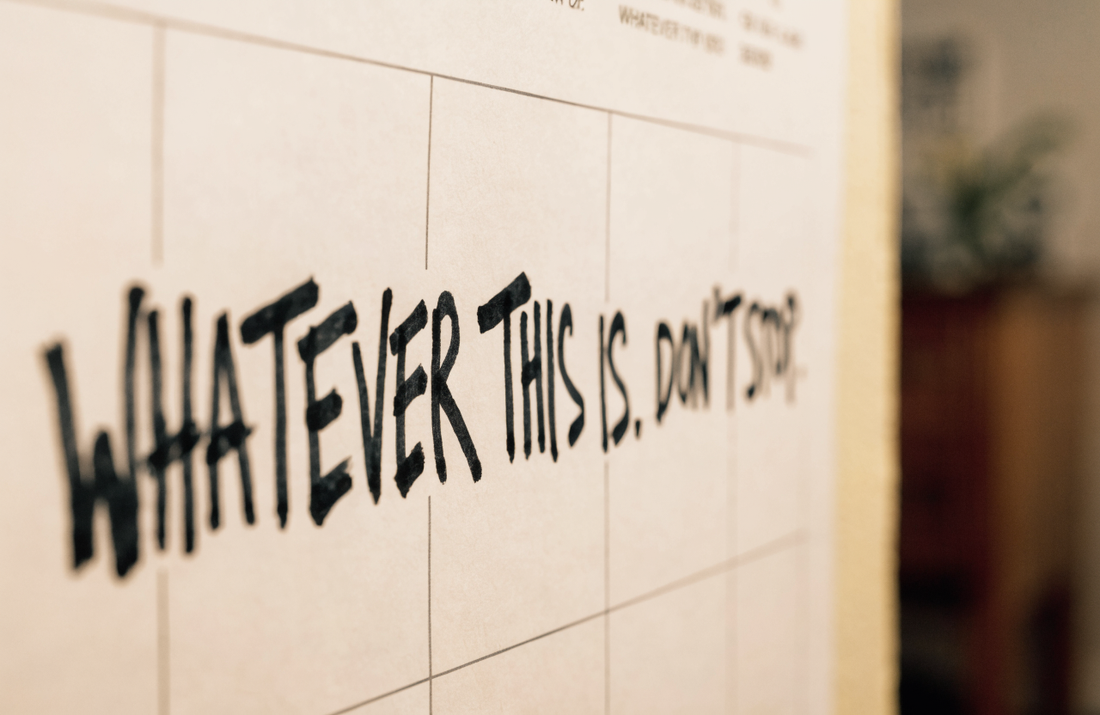
Frank never said a word to my face. But near the end of the month I found handwriting on the calendar that wasn’t mine — his block capitals, right under one of my pencil notes: “WHATEVER THIS IS. DON’T STOP.” He’d watched me carry the laundry basket upstairs without touching the railing. Of everything I could tell you, I trust that line the most, because I didn’t write it.
My daughter caught it too. She watched me swing her toddler up out of the car seat, and I couldn’t have faked whatever she saw, because I didn’t know she was looking. Her exact words: “Also, where do I get one.”
When the month was up, I took the bracelet off for a day. Just to see. I put it back on the next morning and it hasn’t come off since — shower, garden, sleep. Solid copper doesn’t mind. It’s stopped looking like the one from the box, too. The patina builds with wear, a little different on every woman who puts one on, so no two ever end up alike. Mine looks like mine now. Marie’s looks like thirty years — and one of her granddaughters has already called dibs on it.
Then I called Marie. She laughed so hard she had to put the phone down.
Now, one woman to another: don’t believe me. I wouldn’t have believed me either. Test it. Wear it 30 mornings — mornings, not days, because morning is when hands are at their worst. You know that already. If morning 31 feels exactly like morning 1, send it back. Here’s the part I double-checked before writing a word of this: Maggie's Copper guarantees their pieces for life. Not 30 days. Not a year. Life. That’s not a guarantee a plated-brass company can afford to make.
So don’t think of it as buying a bracelet. Think of it the way I graded papers: nobody fails on day one. You get thirty mornings, and the deadline never comes.
One practical note. Each bracelet is worked from a single solid bar of 99.9% pure copper — magnet-tested, no brass core. When my daughter ordered hers, her size was gone and took three weeks to come back. When I went back last month to order one for Marie’s birthday — yes, really — small was out again. If you have small wrists, I wouldn’t sit on this page.
Start your own calendar tomorrow, 6:40 a.m.
I’d have bet my pension. I’m glad nobody took it.
Women Everywhere Are Making Copper Part of Their Daily Life
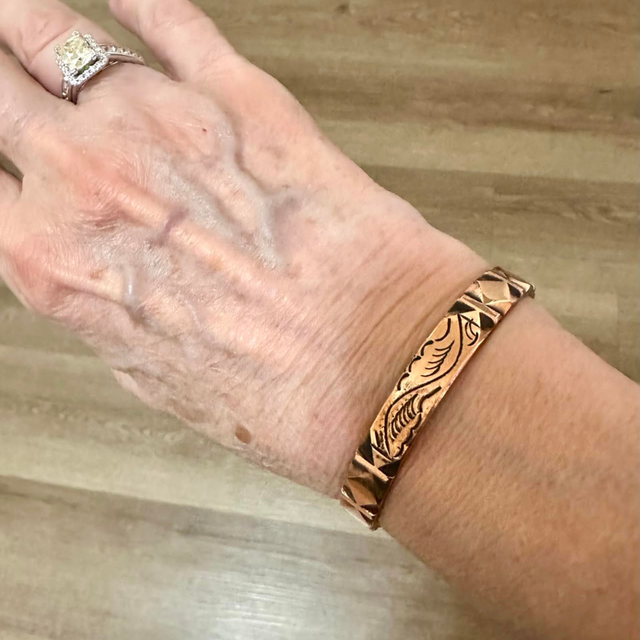
★★★★★
I did the magnet test on the bracelet I bought on vacation years ago. It stuck. I was so mad I ordered from Maggie's Copper the same night. The difference in weight alone tells you everything.
Barbara M.
✔ Verified Customer
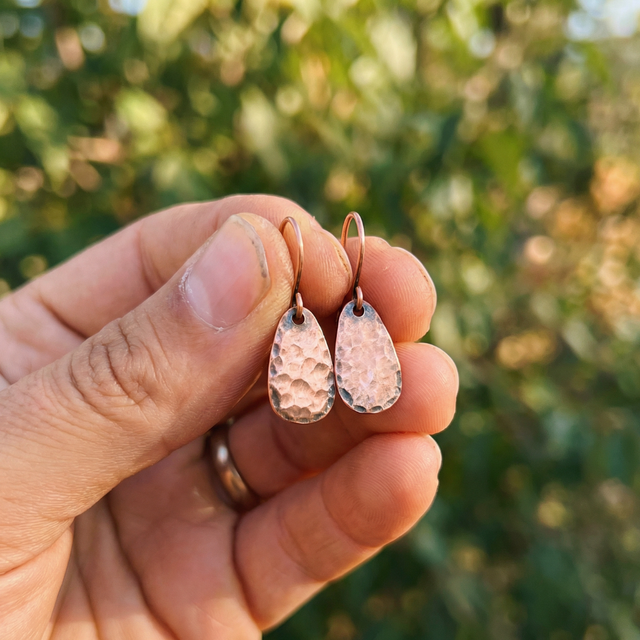
★★★★★
The green mark scared me at first — then I read why it happens and now I check for it. My daughter calls it my receipt. Beautifully made, you can see the hammer marks. I went back for the earrings.
Linda T.
✔ Verified Customer
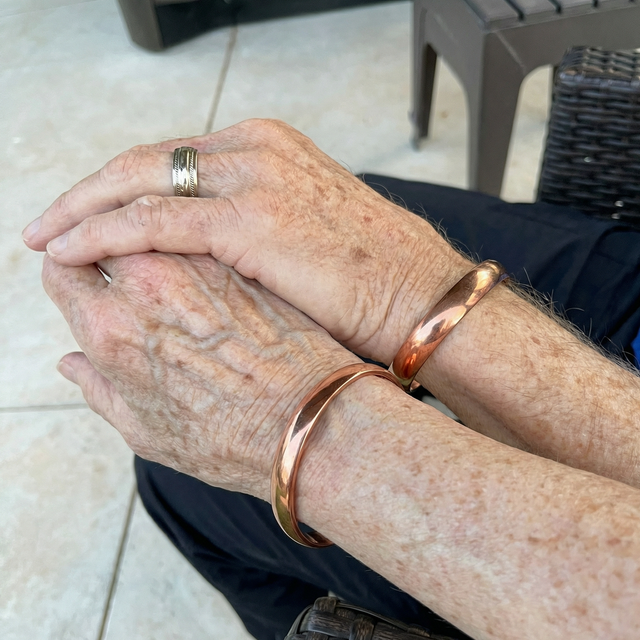
★★★★★
Bought one for myself and one for my mother, 84. She hasn't taken hers off since Christmas. It's the first gift I've given her in years that she actually wears every day.
Susan K.
✔ Verified Customer
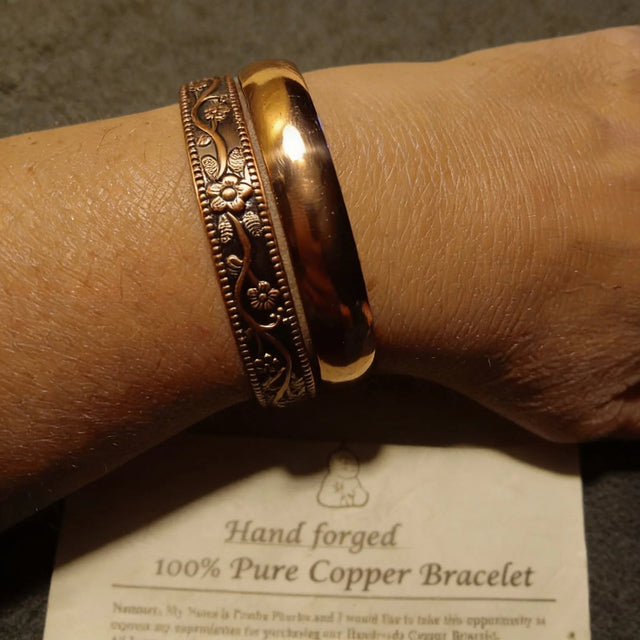
★★★★★
Solid, heavy, warms to your skin in a minute. I've owned two 'copper' bracelets before and they were toys compared to this. The lifetime guarantee is what convinced my husband.
Carol D.
✔ Verified Customer
I'm a retired teacher sharing my own experience — this is a personal account, not medical advice. Individual experiences vary. Copper jewelry is not intended to diagnose, treat, cure, or prevent any disease.