They buried the cheapest answer to stiff joints and cold hands because nobody can patent it. My sister found it on her wrist at 68.





It is bolted to the door of her doctor's exam room, and it is not in his textbook. No patent, no funding, no trials, no textbook.


My name is Judy Halloran. I am 61, and I taught third grade in Toledo for forty years. Last spring I was driving over to my older sister's house almost every day, and every week I could see her struggling a little more than the week before.
Marie is 68. She lives eleven minutes from me. By March she was, in plain words, in bad shape.
She had a pause at the bottom of her staircase. Hand flat on the railing, a breath in, and then up. She never mentioned it.
Her hands were cold in a warm room. She had stopped wearing her rings because her fingers stayed stiff until almost noon. She was asleep in the recliner by two every afternoon with the television still going.
Then she handed me a jar of pickles to open at her own table. She did not say anything and neither did I. Marie is the one who opens the jars in our family. She has been since we were kids. That was the day I understood how bad it had gotten.
I drove home and sat in the driveway with the engine off until the porch light came on.
Then my daughter needed me in Columbus with the toddler, and I was gone most of April and May. I called Marie on Sundays. She always says she is fine.
I did not know then that what changed her spring was in the medical journals a hundred years ago. Or why it is not in them now. I know now.
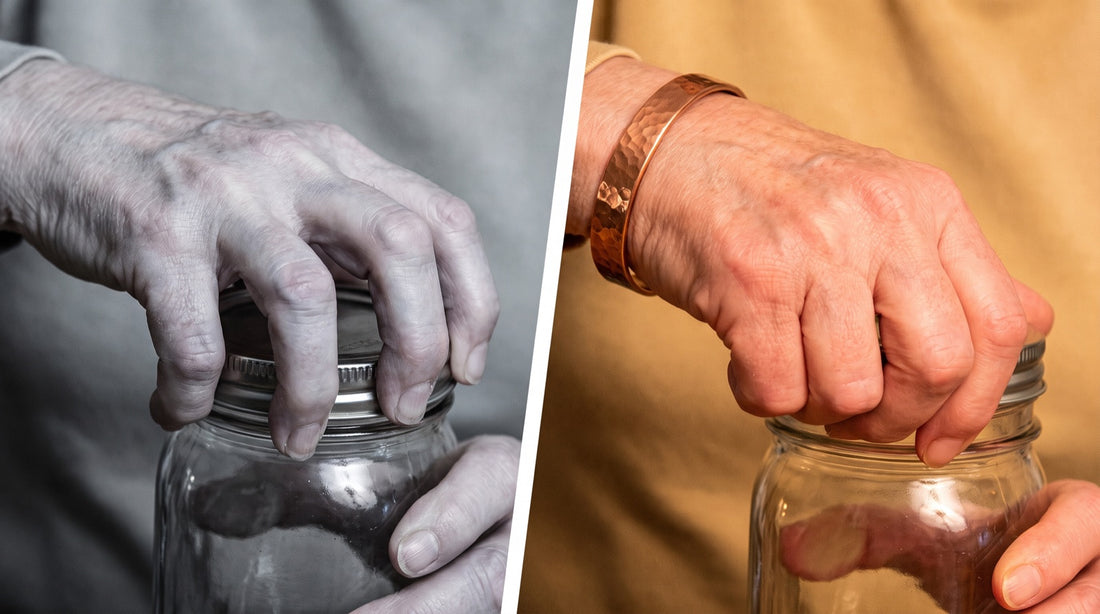
The Sunday My Sister Was Somebody Else
It was the first Sunday in June, my first weekend home. I was setting the table and Marie came up my front steps carrying a casserole dish with both hands. Full dish. Glass lid. No railing.
I did not say anything. I watched.
She took her coat off by herself. She pulled the roasting pan out of my oven herself, and I let her. Halfway through dinner I reached across for the salt and her fingers were warm. In March they had been cold in a warm room.
After dessert I asked her straight out. What changed.
She thought about it and gave me three answers in a row, and none of them fit. The new mattress. The vitamin D her doctor added in January. The weather finally turning. She was listing them. Not one sounded like she believed it.
Then she said something I have not stopped thinking about. I do not know, Judy. I just feel like myself again. I stopped noticing the stairs about two months ago and I never thought to ask why.
Two months. The mattress was from October. The vitamin D was January. The weather in Toledo does not turn until May.
None of her answers matched her own timeline. Something else did.

Where Did You Get Those
I went back through it like a report card. What was new in Marie's life in the first week of April.
Nothing. Same house, same doctor, same pills, same church, same grocery store.
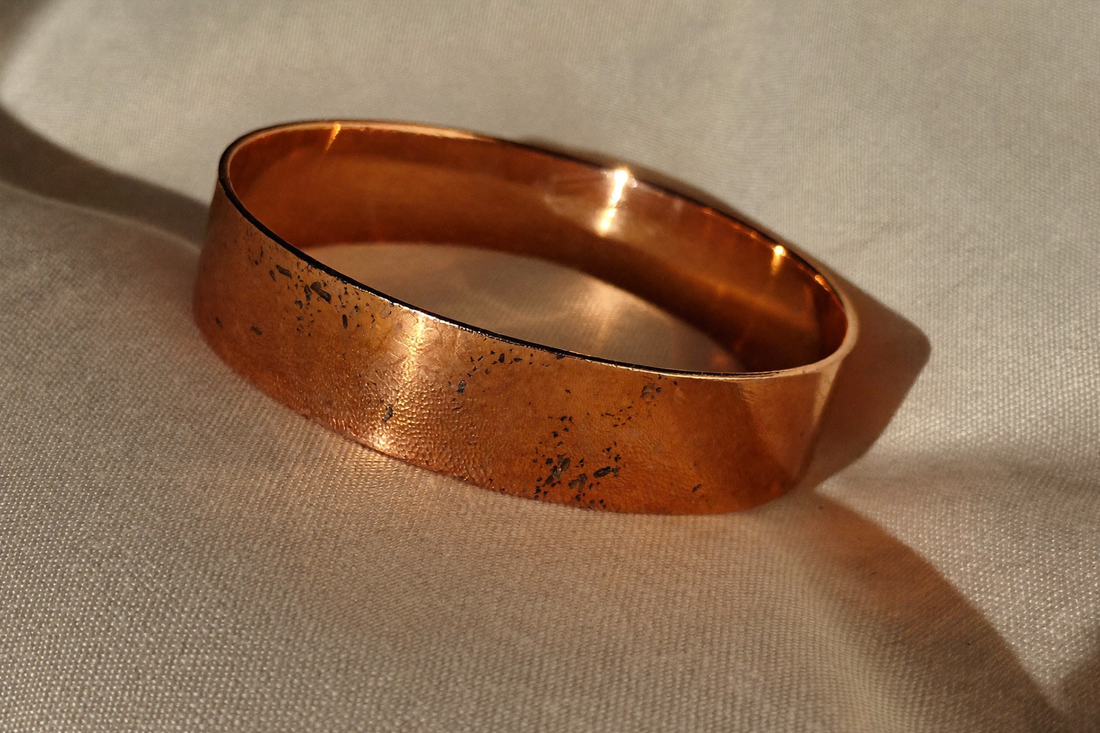
Then I remembered her birthday. April 3rd. Her son mailed her a package from New York, and inside were two things she had never worn in her life: a solid copper bracelet and a solid copper necklace. Heavy pieces, a warm reddish color, with a hammered finish that catches the light. She put them on at the dinner table that night because he was on the phone and she wanted him to hear that she liked them.
She never took them off. Shower, garden, bed. She told me they got warm on her skin after a minute and she forgot they were there.
The week she started feeling better was the week she started wearing copper. Not near it. The same week.
I asked her where they came from. She read me the card. A family jeweler in New York, in business since 1964, a name I had never heard before. Maggie's Copper.
A bracelet. I had tried copper three times over the years, and every one of them did nothing. I nearly said so out loud.
Instead I went home and started reading. Three weeks later I was angrier at my own doctor than I had ever been at any bracelet. Here is why.
Three Weeks With a Red Pen
I am not a doctor. I am a retired schoolteacher who knows how to read, and for three weeks I read published research the way I used to grade papers, with a red pen and a suspicious attitude.
Here is what I did not know at 61. Everything holding you up, your joints, your skin, your blood vessels, is built from collagen. But collagen is only bricks. Your body has to mortar those bricks together, and the enzyme that lays the mortar, lysyl oxidase, cannot work without one mineral at its core. Copper.
More than thirty different enzymes in the human body need copper to run at all. In six decades, no one in a white coat had ever said that word to me once.
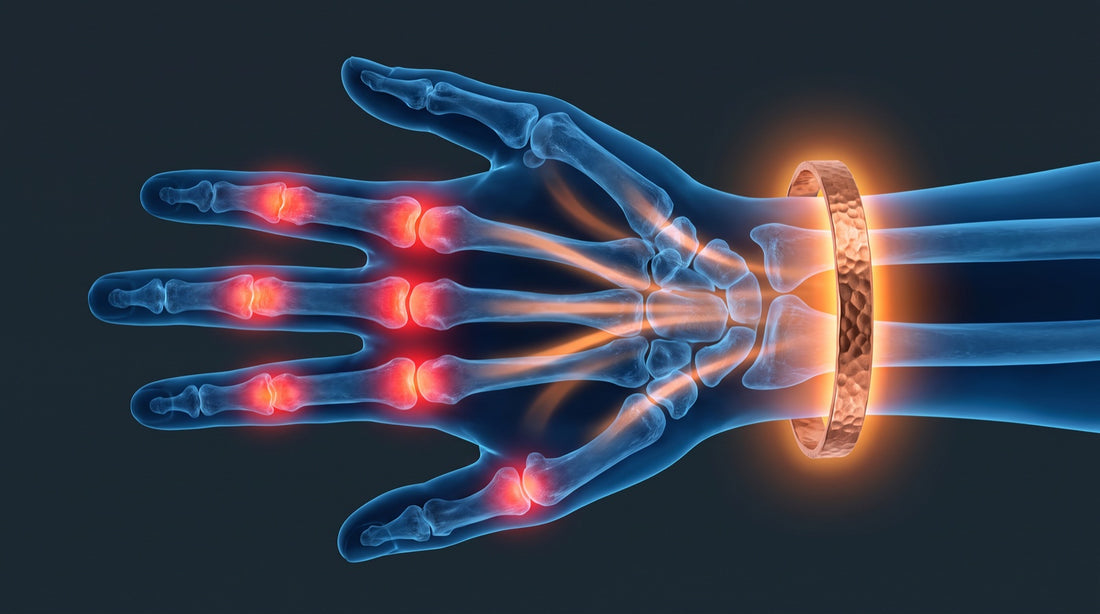
Then I found the list. Copper is what your body uses to move iron into your blood. Without enough of it the iron just sits there, and here is what the textbooks say that looks like: tired all the time, cold hands and feet, stiff in the morning, winded on the stairs. I read that list three times. That was not a list. That was my sister in March.
Then it got worse. The big white zinc bottle, the one half the country bought in 2020, sits in my sister's cabinet and in mine. High-dose zinc blocks copper absorption in the gut. I did not believe that, so I asked my Kroger pharmacist. She confirmed it in about ten seconds. It is not printed on either bottle.
One nutrition journal out of Cambridge calls what is happening to people like us an epidemic of chronic copper deficiency. An epidemic. Marie's doctor called it getting older.
Put it next to each other. Her body could not lay the mortar. Her blood could not use the iron. Her cabinet had a bottle blocking the one mineral both of them need. And nobody in a white coat had ever said the word. I am not a scientist, but I can add.

The Study With the Scale
There is one study nobody buried, mostly because it was too small and too old for anyone to bother.
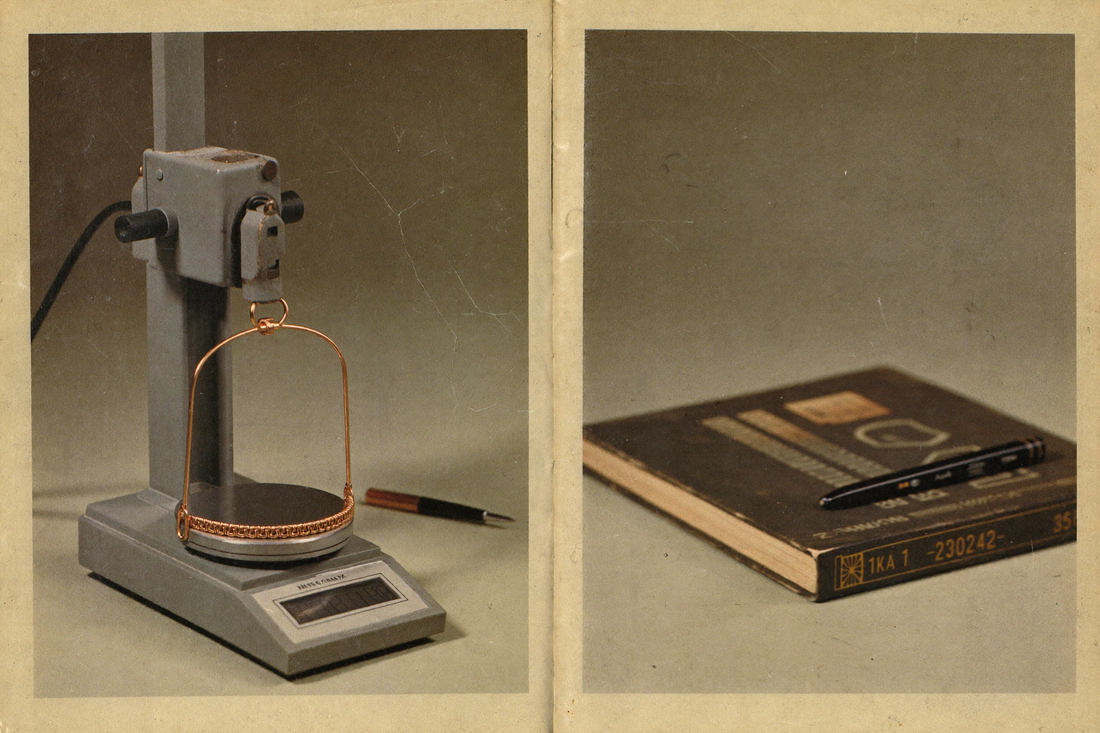
In 1976, researchers writing in a journal called Agents and Actions did something almost comically simple. About 300 people. Real copper bracelets against painted aluminum fakes. And they weighed the copper ones on a precision scale before and after months of wear.
The bracelets came back lighter. Roughly 13 milligrams a month, dissolved into the wearers' sweat. Copper is soluble in human sweat. The metal does not just sit on your wrist. It leaves.
Onto the person wearing it.
That is all they measured, and that is all I will tell you they measured. But when I read it, the faint green ring Marie had started getting under her bracelet stopped being a stain to scrub off in the shower. The green is not dirt, and it is not the mark of cheap metal the way the Amazon reviews will tell you. It is where the copper went.
It is the receipt.
Then, in One Generation, Gone
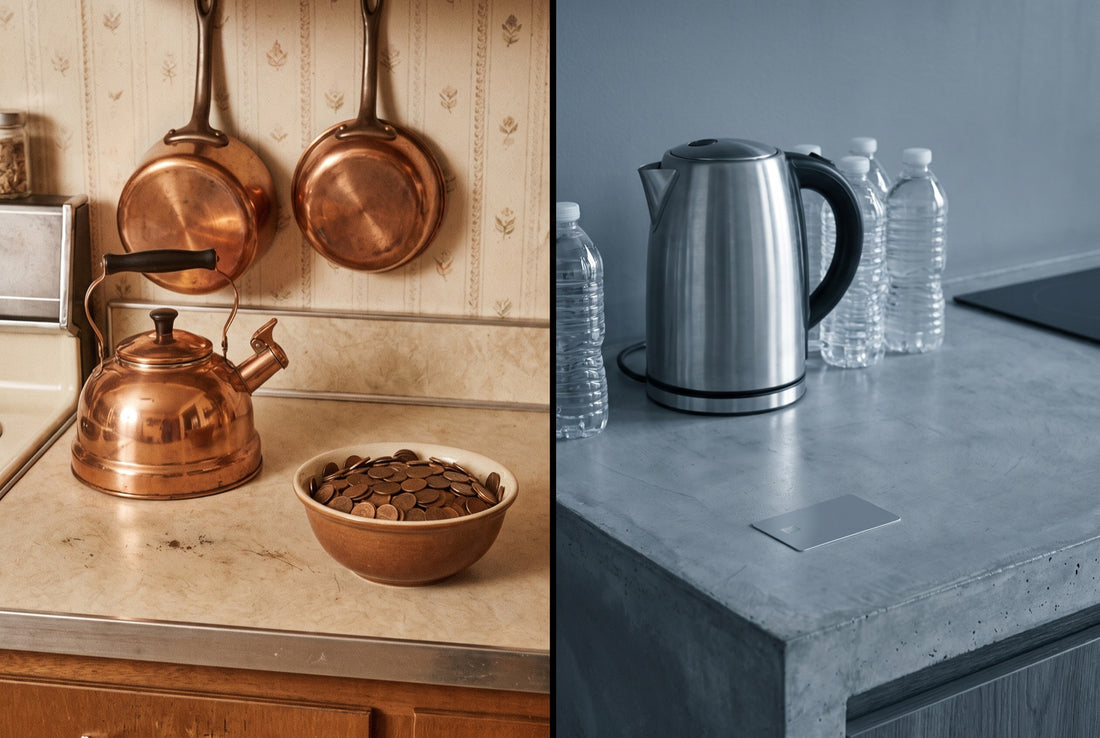
Copper is not something a website invented last year. My grandmother touched it a hundred times a day and never thought about it once. The kettle. The pans. The pennies in her apron pocket. The pipes under her sink. Copper bracelets sat in every drugstore in Ohio next to the aspirin, and doctors in the 1800s were still prescribing copper and publishing their results in medical journals. You can find the journals. I did.
Then, in one generation, mine, it all went away. Stainless steel. Plastic. Cards instead of coins. Bottled water. A whole country that lived skin to skin with this metal every day of its life stopped touching it almost overnight.
And it vanished from the textbooks at the same time. Not disproven. Not withdrawn. Not replaced by something better. Gone.
I sat at my kitchen table with that and asked the only question a teacher knows how to ask. Why. So I followed the money.
Follow the Money
I will warn you now that it made me angry.
Nobody can patent a metal.
A drug company will spend hundreds of millions of dollars running trials on a pill, because the patent pays it back a hundred times over. Nobody spends that studying something any woman on earth can buy for the price of the metal itself. There is no payday at the end of it.
No patent, no funding. No funding, no trials. No trials, no chapter in the textbook. No chapter in the textbook, no doctor who ever learned it. And somewhere along the way, five thousand years of daily human use got filed under folk remedy, right next to the crystals and the horoscopes.
They did not disprove it. They buried it. Quietly, by never paying for the study, so that nobody in a white coat would ever have to say the word copper out loud again.
And who filled the empty shelf? Look in Marie's cabinet. A pill for her stiff mornings. A second pill because the first one eats her stomach. The zinc that blocks the copper. Three bottles, three refills a month, every month, for the rest of her life. That is the business. A woman who is fine is not a customer.
It is them. It is always them.
Marie's doctor is not hiding anything from her. He was never taught it. Ask who paid for the textbook he learned from, and who sponsors the conferences he attends to keep his license. Same people. Same three bottles.

One more thing.
In 2008, the Environmental Protection Agency registered copper alloys as antimicrobial. The first solid material ever given that registration. Not a folk remedy. A federal registration, on the record, with the paperwork to prove it.
And hospitals listened. They are now bolting copper onto the exact surfaces they most need to trust: door handles, bed rails, the push plates on the ward doors.
So put those two facts side by side. Copper is gone from my sister's doctor's textbook. But it is on his door handle.
He touches copper fifty times a day on his way in to tell my sister she is getting older.
They trust it enough to put it on the door of the room. They will not say the word inside the room.
I thought about Marie handing me that jar of pickles at her own table, and about how many years she had been told it was her age.

New York family jeweler since 1964. Limited time.
The Magnet in My Kitchen
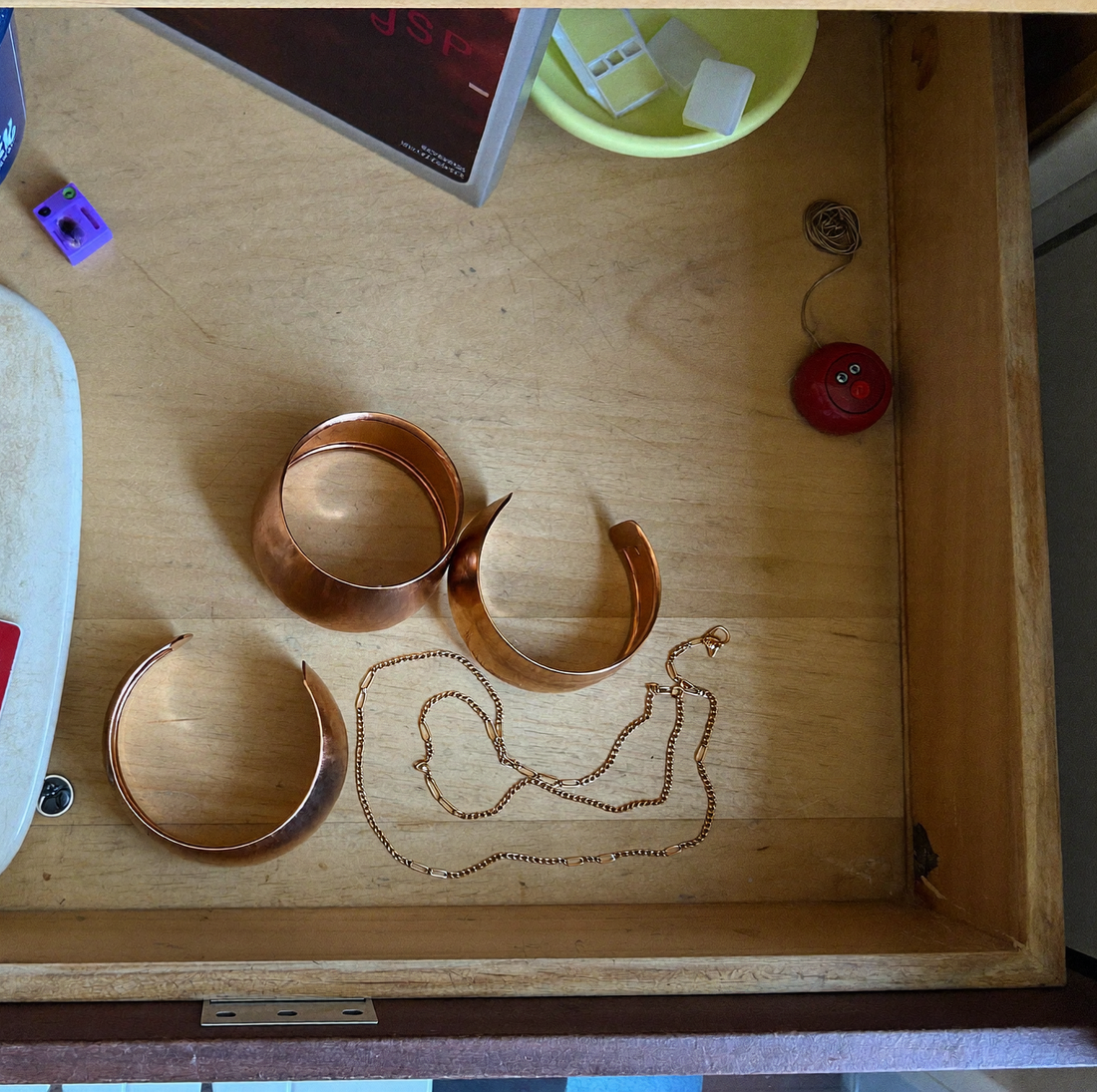
Before I spent a dime, I went through my own house and found the three copper bracelets I told you about, the ones I had bought over the years and quietly stopped wearing. Amazon. A mall kiosk. A cruise ship gift shop. Maybe you have a drawer like that too.
I stood in my kitchen holding a fridge magnet, feeling like a fool twice over.
All three stuck.
Copper is not magnetic. If a magnet grabs it, it is not copper. It is steel with a copper-colored coat sprayed on, and I had bought three of them and blamed copper every time. Plating costs pennies. Solid copper does not. And nobody checks.
Marie's bracelet? The magnet slid straight off.
So I ordered two solid copper bracelets from two different companies. The first passed the magnet but weighed almost nothing in my hand, like the tab off a soda can. Plated brass passes a magnet too. I sent it back.
The second was from the jeweler on Marie's card. Maggie's Copper, the New York family shop, since 1964. Solid 99.9% pure copper, no plating, no brass core, with the same hammered finish as hers. It has a real weight to it. It is cold for a minute, then it takes your temperature and you stop noticing it. That is what solid metal does. Plating cannot.
The magnet slid straight off. I ordered the necklace the same night.
What the First Month Was Actually Like
The morning the box came I put both pieces on at the kitchen sink, and in that day's square on the wall calendar, where I used to write parent-teacher conferences, I penciled two words. Probably scammed. Old grading habit. I wore them anyway, mostly so I could tell Marie I had tried.
I should say what I was testing. I am not in the shape Marie was in. But I had a coffee jar I could not open until my hands had been under hot tap water for a full minute, and I had been doing that every morning for two years. Nobody knew about the hot water. Not even Frank.
The first week, nothing. I want to say that plainly, because the first week is where I would have quit if I had not been too stubborn to give my sister the satisfaction.
Around the second week a faint green ring showed up on my wrist, and I got halfway through scrubbing it off before I remembered the scale in that 1976 study. I left it alone.
Then one morning near the middle of the month, the coffee jar. Cold hands, straight out of bed, no hot water, and I had the lid off before I realized what I was doing. I stood there holding an open jar of coffee at 7:15 in the morning and laughed out loud in an empty kitchen.
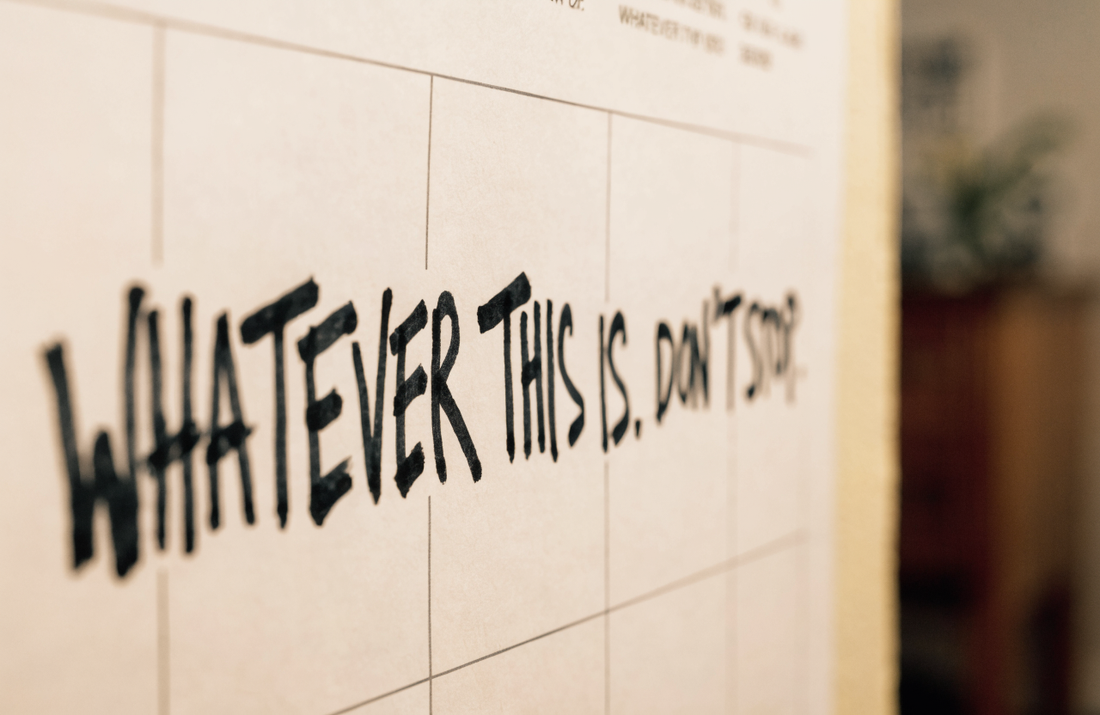
Frank never said a word to my face. But near the end of the month I found handwriting on the calendar that was not mine. His block capitals, right under one of my pencil notes: WHATEVER THIS IS. DON'T STOP.
He had watched me carry the laundry basket upstairs without touching the railing. Of everything I could tell you, I trust that line the most, because I did not write it.
My daughter caught it too. She watched me swing her toddler up out of the car seat in the driveway, one motion, no bracing on the door, and I could not have faked whatever she saw because I did not know she was looking. Her exact words were, also, where do I get one.
When the month was up I took both pieces off for two days. Just to see. I put them back on the third morning and they have not come off since. Shower, garden, sleep. Solid copper does not mind.
I know what I read and I know what I saw. What I saw was my sister carrying a casserole up my front steps, and then me carrying a laundry basket up mine.

Thirty Mornings. No Deadline.
One woman to another: do not believe me. I would not have believed me either.
Test it. Wear it thirty mornings. Mornings, not days, because morning is when hands are at their worst and you know that already. If morning 31 feels exactly like morning 1, send it back. Maggie's Copper gives you a 30-Day Money-Back Guarantee, and I checked how it works before writing a word of this. You email them. That is the whole procedure.
Then there is the part a plated-brass company could never afford. If a piece ever tarnishes, at any point in your life, they refund you double what you paid. No time limit. Think about what a company has to know about its own metal to put that in writing.
Shipping inside the US is free and it arrives in one to three days. Marie's son paid full price for hers in April. Right now you do not have to. When my daughter ordered, her bracelet size was gone for three weeks. If you have small wrists, I would not sit on this page.
I called Marie the night I found Frank's handwriting on the calendar. I told her what I had read, and why I thought nobody had ever told either of us.
She laughed so hard she had to put the phone down.
Then she said, Judy. It is always them.

What Other Women Found After Thirty Mornings
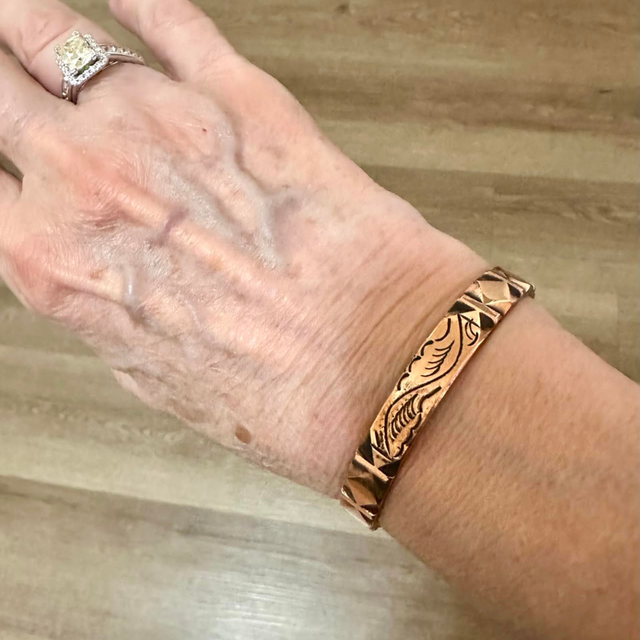
★★★★★
I did the magnet test on the bracelet I bought on a cruise years ago. It stuck. I was so mad I ordered from Maggie's Copper the same night. The weight alone tells you what you were sold before.
Barbara M.
✔ Verified Customer
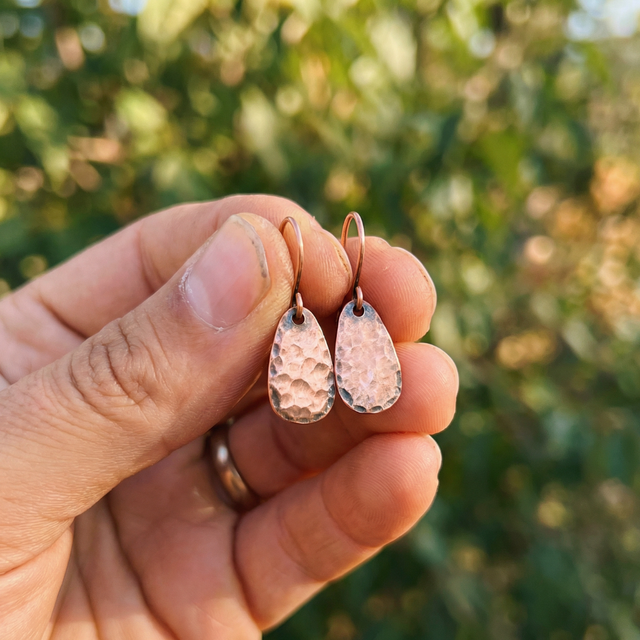
★★★★★
Cold hands from the first frost to Easter every year I can remember. This January I caught myself holding a glass of ice water in my hand and did not think anything of it until later. I went back for the necklace.
Linda T., 70
✔ Verified Customer
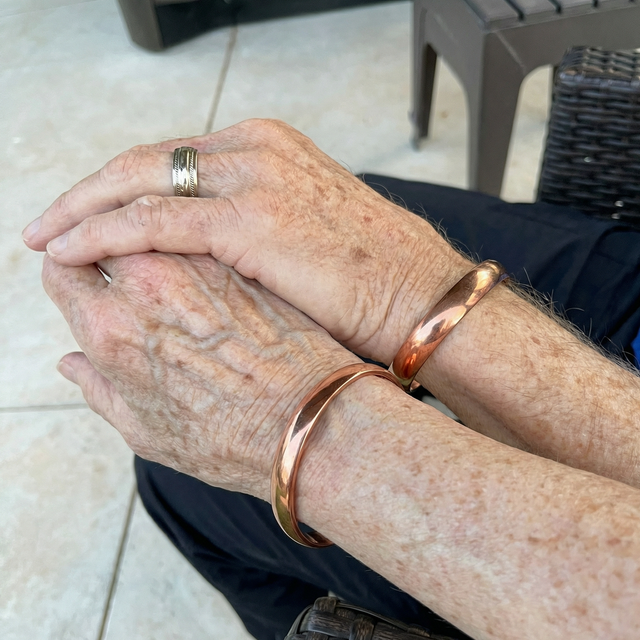
★★★★★
Bought one for myself and one for my mother, 84. She has not taken hers off since Christmas and she is back to doing the crossword in pen. First gift in years she actually wears.
Susan K.
✔ Verified Customer
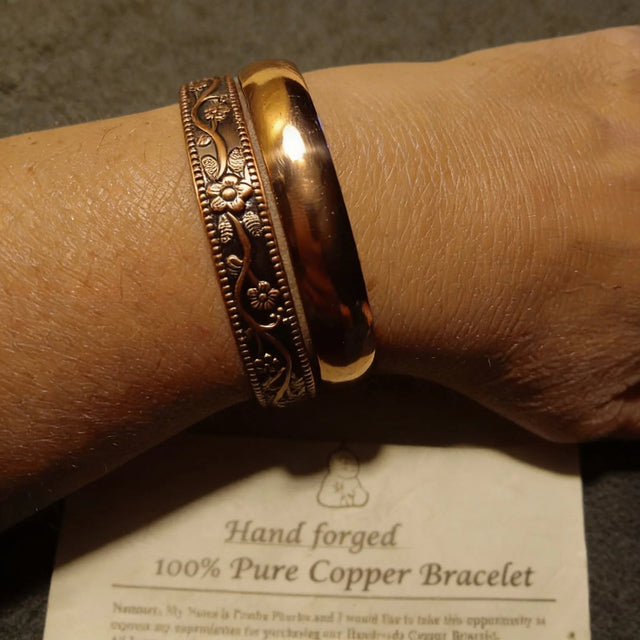
★★★★★
Stiff until noon for six years. Somewhere in the third week I made the bed before coffee and did not notice until I was done. My husband was convinced by the double refund. I was convinced by the bed.
Carol D., 71
✔ Verified Customer
I am a retired teacher sharing my own experience and my sister's. This is a personal account and my personal opinion, not medical advice. Individual experiences vary. Copper jewelry is not intended to diagnose, treat, cure, or prevent any disease.